Search the words "vegan" and "B12" together online and most of the headlines that come back end in an exclamation mark. In fact there is nothing frightening here — it is simply something worth knowing. And the answer is just as simple.
Let's start from the beginning.
What B12 Actually Is, and Where It Comes From
Here is the detail that surprises most people: B12 is produced neither by plants nor by animals. It is made by bacteria.
The reason animal foods contain B12 is that animals come into contact with those bacteria through soil, water and feed. In modern animal farming the picture is more interesting still: most farm animals are given a B12 supplement along with their feed. So the B12 chain begins in the same place for someone eating plant-based as for someone eating meat.
That is a very different picture from the idea that "a plant-based diet is a deficient diet." A more accurate way to put it: in the modern food system B12 is a nutrient everyone needs to keep track of — people eating plant-based simply pay closer attention to it.
Is There B12 in Plant Sources?
The clear answer: unfortified plant foods do not contain B12 in sufficient amounts.
There is a trap to watch for here. Foods such as spirulina, some seaweeds and tempeh are said to contain B12. What they actually contain are B12 analogues — compounds that are structurally similar but that the body cannot use. More than that, some research suggests these analogues may even make it harder to absorb real B12.
So "I take spirulina, my B12 is covered" is, unfortunately, a sentence that may not hold.
Reliable sources:
- A B12 supplement — this is the standard recommendation for people eating plant-based
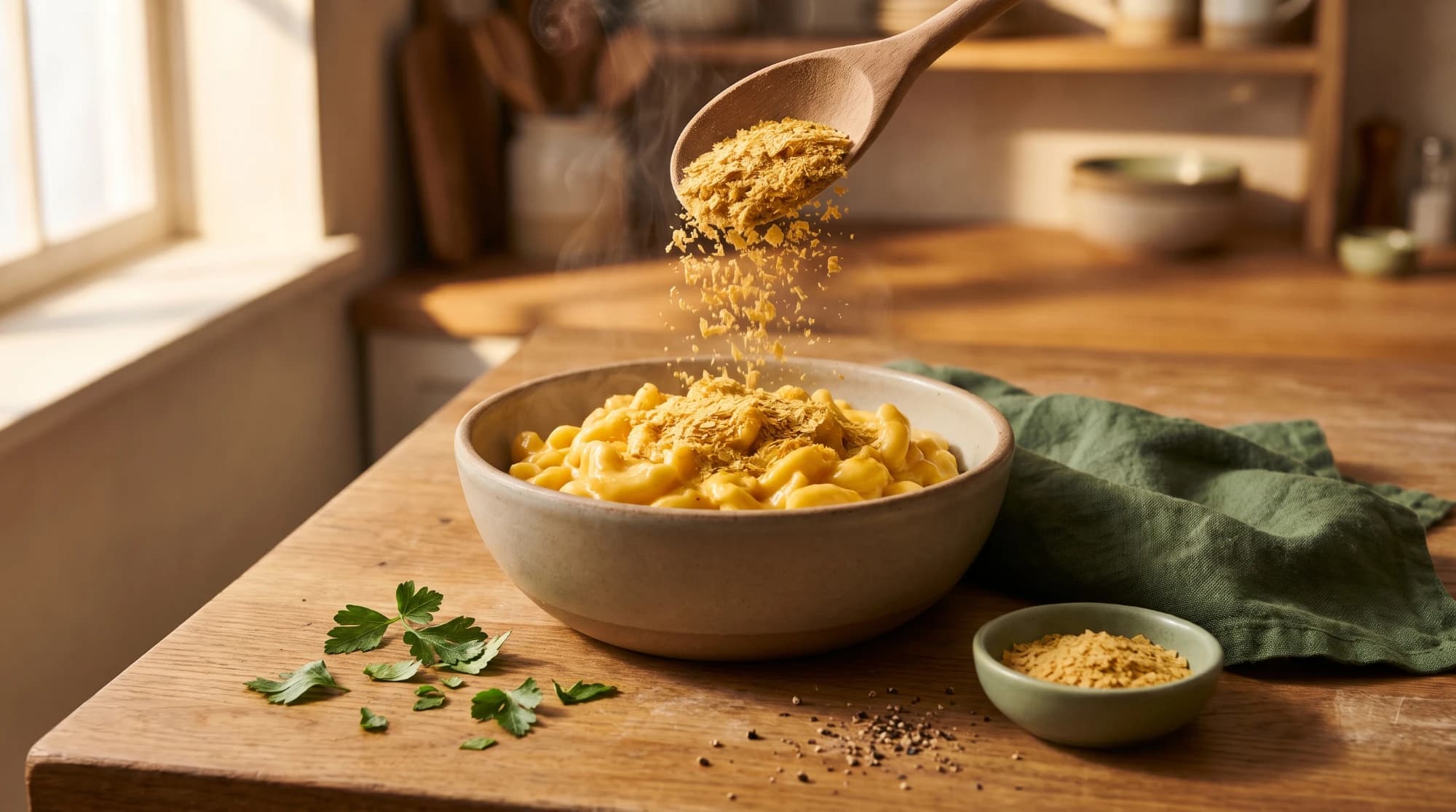
- Foods fortified with B12 — some plant milks, some breakfast cereals, and nutritional yeasts fortified with B12
With fortified foods there is only one rule: read the label. Not every plant milk is fortified, and not every nutritional yeast contains B12. If you cannot see a B12 line in the nutrition table on the packaging, that product is not your B12 source.
Why the Supplement Part Matters So Much
Millions of people around the world eating plant-based get their B12 from a regular supplement, and it is a habit that takes a few seconds a day. Like brushing your teeth — something you do without thinking about it, but do not skip.
The right dose and frequency for you is something your doctor or dietitian decides. Rather than reading a dose online and putting together your own schedule, a single appointment can take this off your mind for years.
The Question of B12 Stores: Why "I Feel Fine" Can Be Misleading
The body stores B12 in the liver, and that store is a fairly large one. Someone moving to a plant-based diet may therefore feel nothing at all for quite a long time.
That looks like good news, but it is the opposite: the inference "I don't feel anything, so there is no problem" does not work here. Depending on the life you lead, your store may be emptying quietly.
This is why the advice for people eating plant-based is always the same: start the supplement without waiting for symptoms, and keep track with regular blood tests.
Factors That Can Affect B12 Absorption
So far we have talked about where B12 comes from. There is another side to the coin: how much of the B12 you take in is actually absorbed. This applies to everyone, whatever their way of eating.
The two clearest factors that can affect absorption are these:
Certain medicines taken regularly. This is the most important item on the list and the one most often overlooked. Medicines that reduce stomach acid — proton pump inhibitors (PPIs) and H2 blockers — along with metformin, widely used in the treatment of diabetes, can reduce B12 absorption. If you have been taking one of these for a long time, it is something to raise with your doctor. Many people are not aware of the connection.
Heavy alcohol consumption. Alcohol in large amounts over a long period affects the lining of the stomach and intestine, and can make absorption harder.
And let us underline this: if your blood B12 comes back low, the answer is not working out which food to avoid. At that point your doctor plans the treatment. This section is here so that you know what to bring up at your appointment.
What a Blood Test Looks At
A detail that will serve you well when you talk to your doctor: the classic serum B12 test does not always give enough information on its own. The figure can look normal while there is a shortfall at the cellular level.
There are two more sensitive markers:
- Holotranscobalamin (active B12)
- Methylmalonic acid (MMA)
Whether to request them is your doctor's decision, but knowing they exist makes your appointment a more productive one.
And let us say this plainly: this article is not a diagnostic tool. Symptoms such as tiredness, numbness or trouble concentrating can come from dozens of different causes. Do not leave yourself at home with a self-diagnosis of B12 deficiency — have the test, and discuss the result with a doctor.
In Short: B12 in Three Sentences
- B12 is produced by bacteria; people eating plant-based get it from a supplement or from fortified foods.
- Spirulina and seaweed will not do the job; read the label to tell a real source from a false one.
- Don't wait for symptoms — a regular supplement and periodic blood tests settle the matter.
Eating plant-based is not about giving something up; it is about eating while knowing where things come from. B12 is part of that knowledge — a subject to learn about, not one to fear.
A Note From Your Kitchen: VitaVegantis Nutritional Yeast
VitaVegantis Nutritional Yeast contains B12. That puts it in the second of the two reliable sources listed above — foods fortified with B12.
Nutritional yeast is already one of the best-loved ingredients in plant-based cooking: it has a cheesy, umami taste. People use it over pasta, in mashed potato, in savoury pastries, in salad dressings, and when making vegan cheese. So if it is something already sitting in your kitchen, it is also one more line in your B12 picture.
There is one point to keep in mind, though: nutritional yeast is an ingredient used a spoonful or two at a time, and it does not take the place of a supplement. How much of your daily B12 need it covers depends on how often and how much you use. The decision about supplements is still one to make with your doctor.
→ VitaVegantis Nutritional Yeast — product details and nutrition figures
To see where you can find our full range: Stockists
Enjoy Nature.