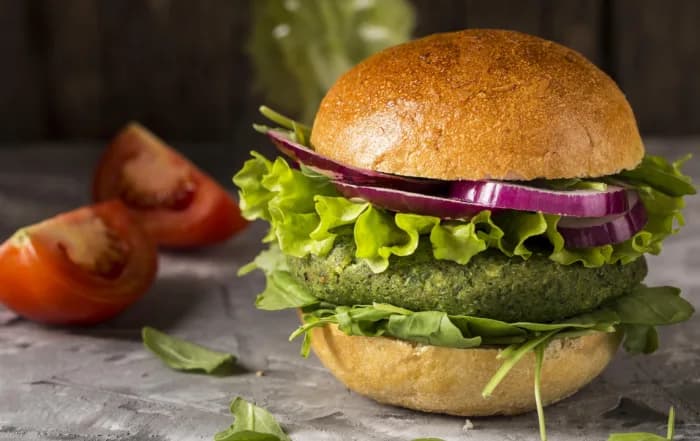
Across Türkiye and Europe today, the trend toward vegan and plant-based eating is spreading fast, becoming a healthy lifestyle choice for many people. Consumers are reducing their dependence on traditional meat and dairy and discovering the benefits of eating plants. This way of eating offers significant advantages for environmental sustainability, animal welfare and personal health.
Research conducted by V-Label — the international labelling organisation for vegan and vegetarian products and services — together with market research and consultancy firm FMCG Gurus offers striking data that will shape the vegan food industry and its regulation in Türkiye and Europe.
Conducted in 14 European countries including Türkiye, the study examines the dynamics of the vegan product market, its obstacles and its opportunities — shedding light on how eating habits are changing around animal rights, climate change and health.
Recent research shows the number of vegans worldwide has reached 78.9 million, with interest in the vegan philosophy and its practices growing exponentially: between 2014 and 2020, that interest rose by 646 percent in the Netherlands, 591 percent in Greece and 397 percent in Türkiye. In parallel, the vegan product market is projected to reach 22.1 billion dollars by 2025.
Evaluating the research, V-Label Türkiye representative Ebru Arıman says: "The plant-based product range grows exponentially every year, and the rapid rise in consumer expectations — alongside competition in a growing market — is driving innovation and, with it, product quality. Both the price/quality balance and the market size are developing well."
Highlights from Türkiye
In the Turkish leg of the study — conducted across seven regions, primarily the Aegean, Black Sea, Marmara and Central Anatolia — 52 percent of survey participants said they do not regularly eat animal meat, or do not eat it at all. Of this group, 22 percent gave up animal meat entirely within the past 13 months, and 40 percent much longer ago.
Among those who say they eat meat regularly, 39 percent want to give up animal-derived meat entirely.
While 18.5 percent of consumers report never consuming animal-derived milk and dairy, 45 percent say they buy the plant-based drinks and foods on the market as alternatives.
28 percent of consumers in Türkiye describe their diet as flexitarian, 20 percent as vegetarian, 3 percent as vegan and 1 percent as pescatarian.
The leading motivations for avoiding animal consumption in Türkiye are, in order: environmental concerns, health, trustworthiness and animal rights.
Two-Thirds of Consumers Are Considering Giving Up Animal Meat
The plant-based meat industry keeps gaining strength. According to the latest projections based on attitudes and behaviour toward plant-based alternatives, the industry will grow by 9.4 percent over the next three years.
Completed with samples of 1,000 people per country, the research shows that more and more consumers in Europe are turning away from animal-derived foods toward plant-based eating — increasingly incorporating vegetables, fruit, legumes, grains, nuts and seeds into their diets.
Nearly two-thirds of those who say they regularly eat animal meat report that they are trying, or considering, moving away from it within the next 12 months. Indeed, 34 percent of European consumers say they have added plant-based meat products to their diet, and 48 percent plant-based milk and dairy.
"Better for the Planet and for Health"
Comparing 2020 and 2022 figures for plant-based meat consumption shows an increase of around 30 to 40 percent.
According to the research, the main factors driving this trend are the environment, sustainability and health. 83 percent of European consumers say plant-based meat is better for the planet and the environment, and 82 percent say it is healthier. In Türkiye, environmental awareness is at almost the same level, but the share who believe plant-based meat alternatives are healthier is lower: 74 percent.
The share of people who eat plant-based meat out of concern for animal rights is 59 percent in Europe — and higher in Türkiye, at 66 percent.
Labels Are Being Read: Consumers Are More Conscious
When checking product labels, consumers look at whether products are healthy; they want to be sure they contain no artificial or chemical ingredients known to harm the environment or human health. 74 percent of European consumers say it is important that food and drink be 100 percent natural.
More than three-quarters of consumers also say plant-based products should be made with familiar, well-known ingredients. The same goes for plant-based meat: 69 percent of its consumers think it matters that these products are naturally formulated, and 79 percent that they are made with familiar ingredients.
68 percent of European consumers say they regularly check ingredient lists when buying plant-based food and drink. Asked what the international V-Label mark means to them, 79 percent of consumers in Türkiye answer: "free from animal-based ingredients."
Expectations of Similar Taste, Texture and Appearance
According to the research, one of the most important factors for any plant-based product is that it resemble the product it is meant to replace as closely as possible. For consumers, taste, texture and appearance matter as much as health or the environment. For 82 percent of consumers, flavour outweighs texture and appearance.
The Door Is Open for Innovative Products
The research shows major market potential for brands willing to innovate. A quarter of European consumers who already buy meat alternatives say they are not sufficiently satisfied with them, for two main reasons: 69 percent cite gaps in the product range or too few brands, and 59 percent the lack of plant-based alternatives to chicken, fish and other categories.
The study also finds that cultured meat — grown in laboratories from animal cells as an alternative to plant-based meats made from beans, chickpeas and broad beans — is not popular: only 21 percent of consumers in European countries are willing to try it. Which underlines, once again, the value consumers place on 100 percent natural products.
Flavour, Appearance and Price
However advantageous plant-protein products may be, consumer sentiment has not fully caught up. More than 50 percent of consumers find plant-based protein less appealing in terms of flavour, price and appearance.
It matters that vegan brands work harder on comparable taste and appearance, price options accessible to every income group, and product variety. That said, beyond packaged vegan products, a whole-food plant-based diet of fruit, vegetables, legumes, seeds and grains remains incomparably cheaper than animal-based consumption.
Nutrition Profiles and Format Variety
The findings show that new plant-based products no longer merely imitate the taste and texture of animal meat and dairy; their nutrition profiles are improving by the day. Where soy and wheat once dominated as plant-protein sources, today a range of legumes, seeds, nuts and grains is used to raise and enrich products' nutritional values.
The plant-based milk sector, once dominated by soy milk, now offers a wide variety of plant milks, cheeses and yoghurts — from almond to rice, hazelnut to oat and coconut.
Plant Protein: Vegan Meat, Chicken, Fish and Beyond
Because it is associated with health, the market share of plant-based fish alternatives is also expected to grow. One in three consumers in Europe eats plant-based meat, yet still finds the plant-based alternatives to chicken, fish and seafood markedly lacking.
In the plant-based meat category, options in Europe — vegan steak, burgers, mince, sausages, chicken and fish — keep multiplying, and are chosen by consumers of many different profiles.
As plant-based products increase, consumers are also watching their protein content. 60 percent of European consumers, for example, check protein content when buying plant-based dairy.
The Turkish Market: Additional Data
Plant-based milk and dairy consumption
- 18 percent of consumers do not consume animal-derived milk and dairy. Their motivations: environmental (ecological) concerns at 70 percent, high sugar content at 61 percent, and it being unhealthy at 56 percent. Concern for animal rights stands at 47 percent.
- 45 percent of consumers include plant-based drinks and foods in their diet, mostly buying vegan milk, vegan spreads, nutritious vegan drinks and vegan cheese. The leading reason is that they are "better for the environment", at 78 percent.
- Of those who say they don't consume plant-based dairy themselves, 43 percent still buy these products for family members.
- Among buyers of plant-based dairy, 84 percent pay attention to taste, 79 percent to health claims and benefits, 74 percent to sustainability claims, 65 percent to ingredient and nutrition labels, and 64 percent to price.
Plant-based meat consumption
- 43 percent of consumers include plant-based meat in their diet. Core motivations: "better for the environment" at 82 percent, "healthier and more trustworthy" at 74 percent. Animal-rights concerns stand at 66 percent.
- These consumers find alternatives to beef, chicken, turkey and fish the most appealing.
- Of those who find current plant-based meat products inadequate, 63 percent complain most about the lack of product and brand variety.
- Although protein is among the most researched and watched nutritional values in Türkiye, only 23 percent know how much protein they consumed in the past 24 hours.