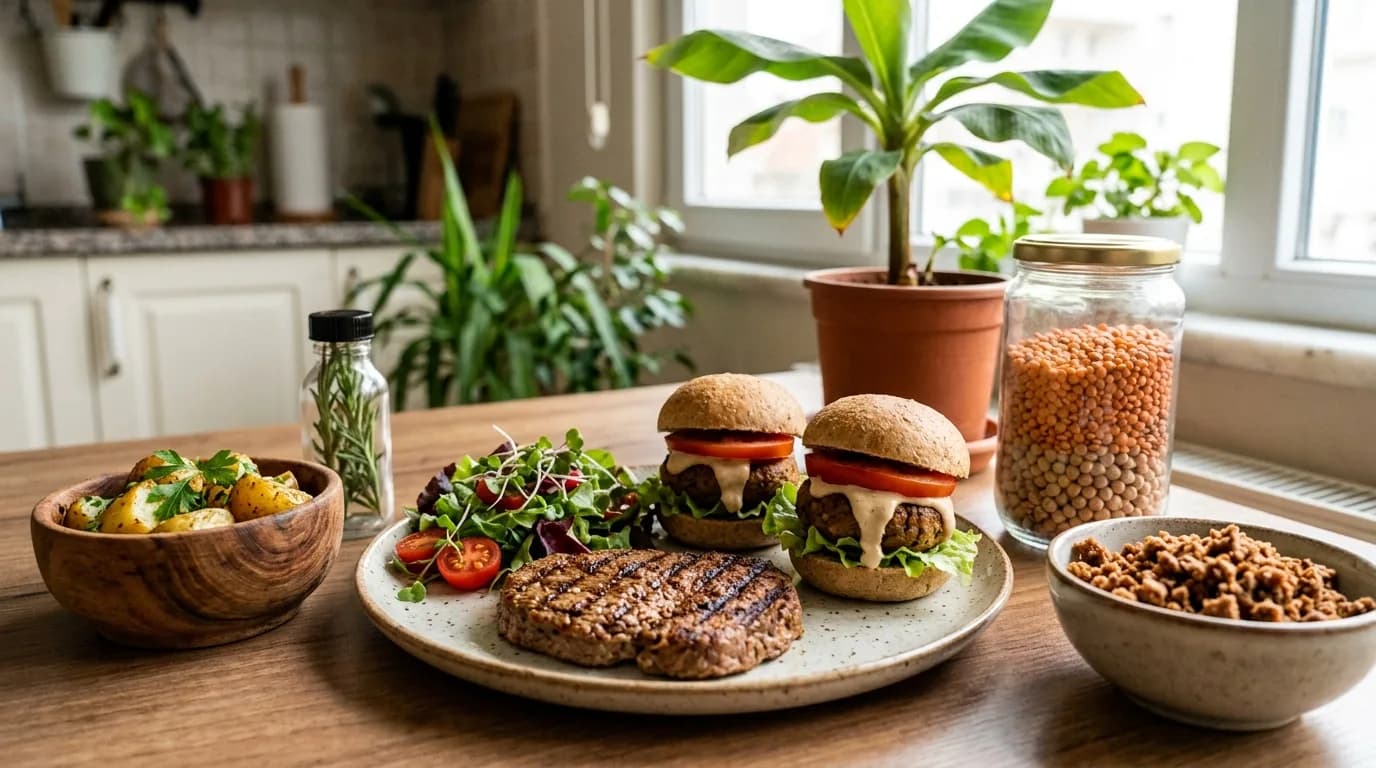
Plant-based meat products — vegan sucuk, sausages, döner and meatballs — turn up more and more often in supermarkets and in vegan and vegetarian kitchens, and they raise a question: are they genuinely nourishing, or just a processed imitation? The short answer: a well-made vegan meat product can be comparable to its traditional counterpart on protein, and it can stand out on some counts thanks to lower saturated fat and higher fibre. In this article we go through what these products are, what they contain, who they suit and what to look for when you choose one.
What Are Vegan Meat Products and What Are They Made From?
Vegan meat products are made by taking protein isolates from plants such as soy, pea, wheat and fava bean and putting them through heating, extrusion and cooling so they take on a meat-like texture and fibre structure. The traditional spices then go in — cumin, red pepper, garlic, black pepper — to give the product the taste and appearance of sucuk, sausage, döner or meatballs.
So a vegan sucuk or vegan meatball contains nothing of animal origin, yet the production logic runs through a texturising process much like the one behind traditional deli products.
How Much Protein Is in Vegan Meat Products?
One of the most common worries here is whether plant-based products carry enough protein. At the raw material level, soy protein is roughly 61% protein by weight and pea protein roughly 82% — strong protein sources by any measure.
At the finished-product level — the sucuk or meatball that actually reaches your plate — a comparative scientific study measured the protein content of plant-based meat analogues at around 18.5% on average, against around 18.1% for their animal-based counterparts (sucuk, meatballs, sausage, pastrami). In other words, a well-formulated vegan meat product can sit at practically the same level as the traditional equivalent on protein.
That figure naturally varies from brand to brand, with the raw material used and with the production method — which is why the nutrition table on the pack is always the most reliable place to look.
Are Vegan Sucuk, Sausage, Döner and Meatballs Healthy?
The answer to "is it healthy" depends on the product, but an international assessment comparing plant-based meat products with traditional meat products found the following:
- Saturated fat: plant-based meat products generally have a lower saturated fat content.
- Fibre: being plant-derived, they contain dietary fibre, which animal products do not.
- Cholesterol: because they are plant-derived, by their nature they contain no cholesterol.
- Additives: this one varies by product — some vegan meat products are heavily processed too, which is why reading the ingredient list matters.
In short: vegan meat products are not automatically a "superfood", but within a balanced diet they offer a reasonable alternative to traditional deli products on a number of counts.
Who Are They For? Ways to Use Them
Vegan meat products aren't only for vegans and vegetarians. They are a practical option for these groups too:
- Flexitarians — people cutting back on meat without giving it up entirely
- People keeping an eye on cholesterol or saturated fat
- People choosing plant-based eating for environmental reasons
- Curious palates looking for new flavours
The uses line up almost exactly with their traditional equivalents: vegan sucuk with eggs at breakfast, vegan meatballs alongside rice, vegan döner in bread or in an İskender. For inspiration, take a look at our own Vegan İskender and Plant-Based White Bean Stew with Vegan Sucuk recipes.
What to Look for When Choosing a Vegan Meat Product
When you pick a good vegan meat product, we'd suggest checking these points:
- Protein content — check how many grams of protein there are per 100 grams.
- A simple ingredient list — it's a plus when the main component is a recognisable plant protein source (soy, pea, wheat and the like).
- Additive density — go for products that are as lightly processed and additive-free as possible.
- Certifications — a vegan certification, and a gluten-free one if you need it, gives extra reassurance about a product's credibility.
At Vita Vegantis these are exactly the principles behind our vegan sucuk, vegan sausage, spinach vosis, chicken döner style product, plant-based Swedish meatballs and hot dog vosis: high in protein, additive-free and certified plant-based content.
Frequently Asked Questions
Do vegan meat products have less protein than real meat? No. A well-formulated vegan meat product can be comparable to traditional meat products on protein. For the exact figure, check the product's nutrition table.
What are vegan sucuk and sausage made from? Usually by texturising protein isolates from plant sources such as soy, pea or wheat protein, then blending them with traditional spices.
Can vegan meat products be eaten every day? They can be part of a balanced diet; as with any food, though, variety matters, and it helps to keep an eye on the salt and fat figures on the label.
Do vegan meat products contain cholesterol? No. Because they are plant-derived, by their nature they contain no cholesterol.
In Short
Chosen well, vegan meat products are a practical alternative that can meet your protein needs and offer some advantages on saturated fat and cholesterol. What matters is reading the ingredient list and the nutrition table, and going for products that are good quality, certified and lightly processed.
To get to know Vita Vegantis products and find your nearest stockists, take a look around our site.